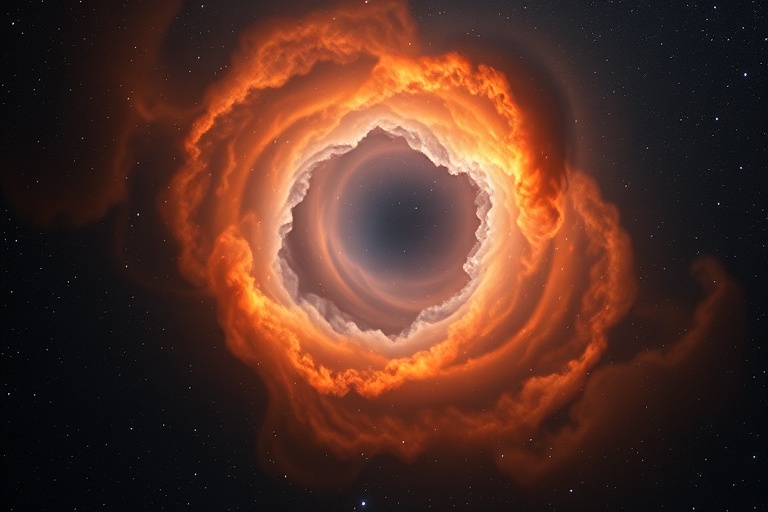
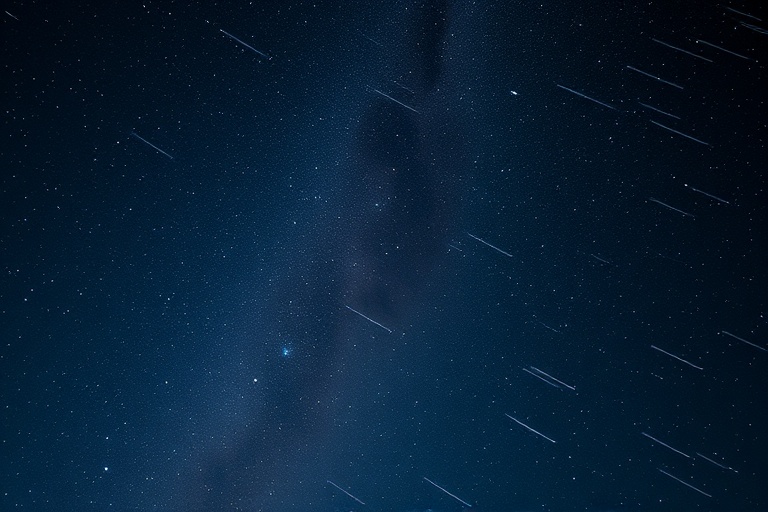
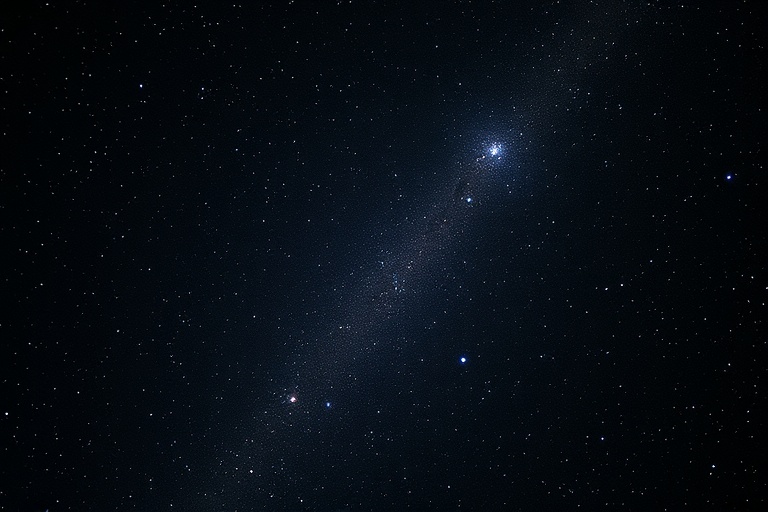
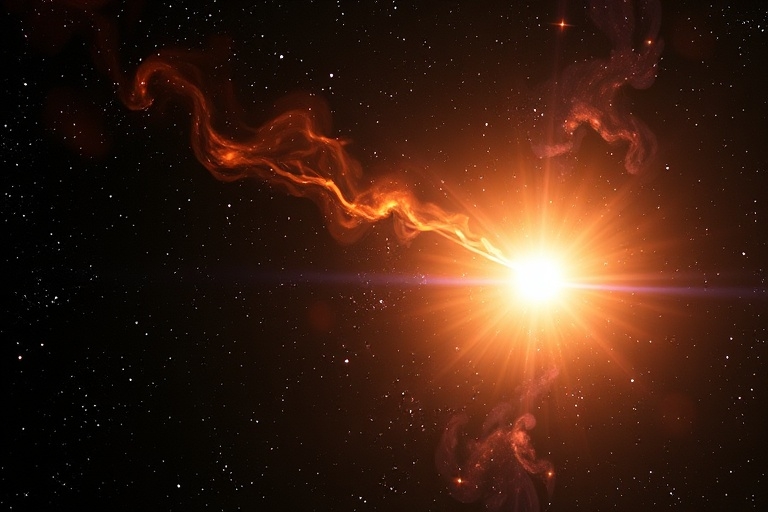
A Nebula is a cloud of gas and dust in outer space that glows from the light of the stars inside it.
Many of the stars in Nebulae are young and newborn stars.
ZODIAC
⚜ What is the Zodiac? ⚜
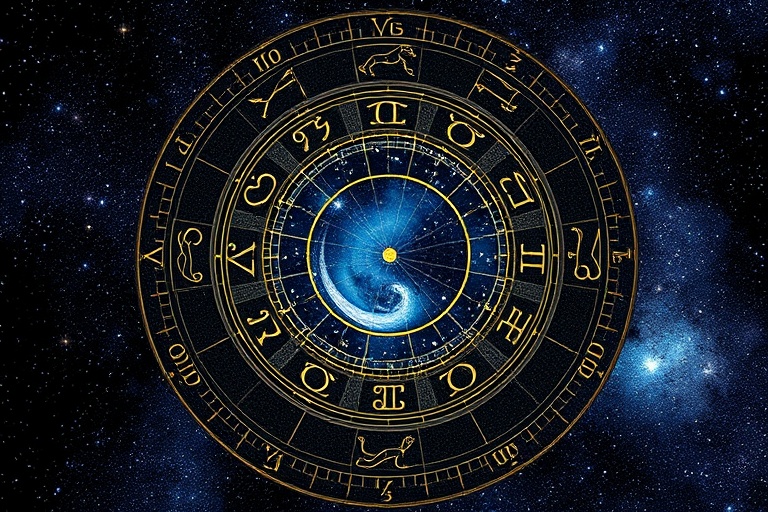
The Zodiac is an imaginary band of constellations that lie on the Ecliptic, in the plane of Earth's orbit.
The Zodiac is used in Astrology.
The planets appear from the Earth to pass through the constallations of the Zodiac as they orbit the Sun.
PLANETS & GODS
⚜ How are the planets named? ⚜
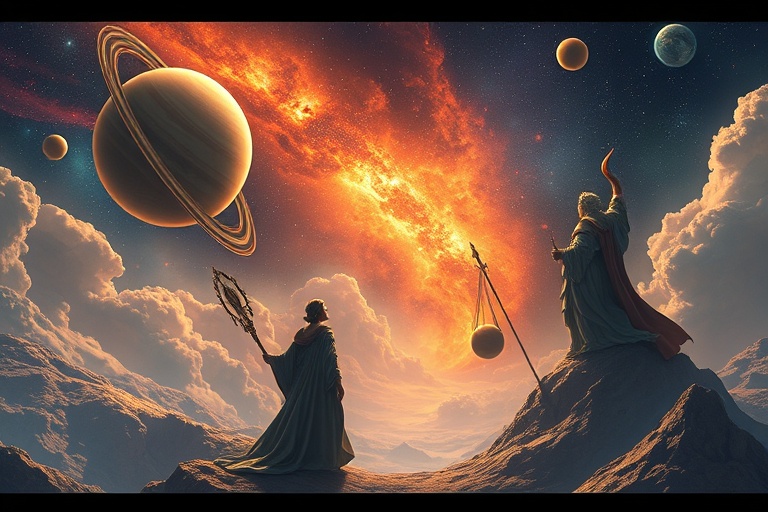
The planets Mercury, Venus, Mars, Jupiter, Saturn and Neptune are all named after Roman Gods. Uranus is named after a Greek God.
Earth was not named after a God and Pluto is no longer a planet, although still named after a God.
LUMINOUS FLUX
⚜ What is Luminous Flux? ⚜
Luminous Flux is the amount of light emitted per unit solid angle of a light source.
The unit of Luminous Flux is the Lumen.
COMET
⚜ What is a Comet? ⚜
A comet is a mass of rock and ice orbiting the Sun that grows a tail of ionized dust as it approaches the Sun.
Famous comets include Halley's Comet and Comet Hale-Bopp.
METEOR SHOWER
⚜ What is a Meteor Shower? ⚜
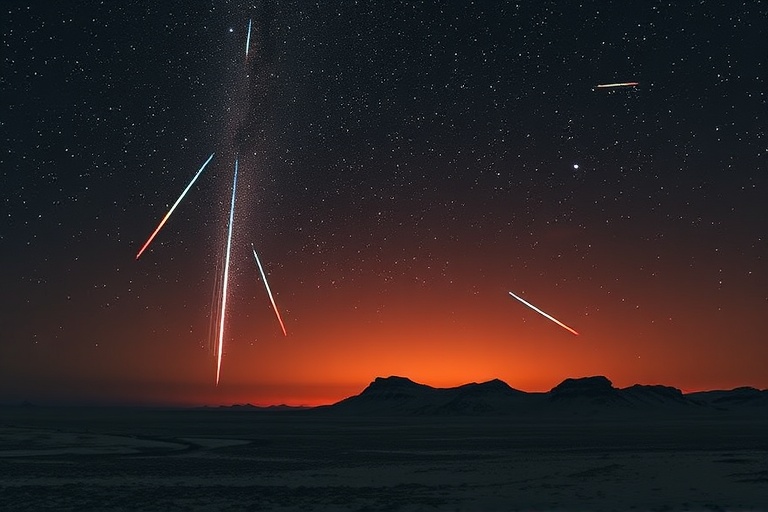
Meteor showers result from debris of comet tails that cross Earth's orbit entering the atmosphere as Earth passes through them.
METEOROIDS, METEORS & METEORITES
⚜ What are Meteoroids, Meteors and Meteorites? ⚜
A meteoroid is a small body of rock flying though space.
A meteor is a meteoroid that crosses Earth's orbit and enters the atmosphere.
A Shooting Star is a meteor that takes some time to burn up in the atmosphere and so becomes visible.
A meteorite is a meteor where some of it survives passing through Earth's atmosphere and hits the Earth's surface.
WINTER SOLSTICE
⚜ What is the Winter Solstice? ⚜
The Winter Solstice occurs about December 21.
At the Winter Solstice, the Northern Hemisphere experiences the shortest day of the year and the Southern Hemisphere experiences the longest day of the year.
At the Winter Solstice, the Sun is lowest in the sky in the Northern Hemisphere.
At the Winter Solstice, Winter begins in the Northern Hemisphere and Summer begins in the Southern Hemisphere.
TRIVIA
🔔 QUESTION : At the Winter Solstice, where are the Sun's rays perfectly vertical to the Earth?
💡 Hover or Tap for the ANSWER! 💡
The Tropic of Capricorn is where the Sun's rays are perfectly vertical to the Earth at the Winter Solstice.
VIRGO CLUSTER
⚜ What is the Virgo Cluster? ⚜
The Virgo Cluster is a group of galaxies in the same proximtity within the constellations Virgo and Coma Berenices.
Notable galaxies in the Virgo Galaxy are the Blackeye Galaxy (M64), M84 and M86.
KEPLER'S LAWS
⚜ What are Kepler's Laws? ⚜
Kepler's Laws describe mathematically the orbits of the planets around the Sun.
Kepler's First Law states the orbits of the planets are ellipses with the Sun at one focus.
Kepler's Second Law states the planets sweep equal areas of orbit in equal times with respect to the Sun at the focus.
Kepler's Third Law states the square of a planets orbital period is proportional to the cube of its average distance from the Sun.
SIRIUS
⚜ What is Sirius? ⚜
Sirius is the brightest star in the night sky.
Sirius is located in the constellation Canis Major.
FRACTAL VIDEO
Click the Image below to watch a Fractal Relaxation Video.